
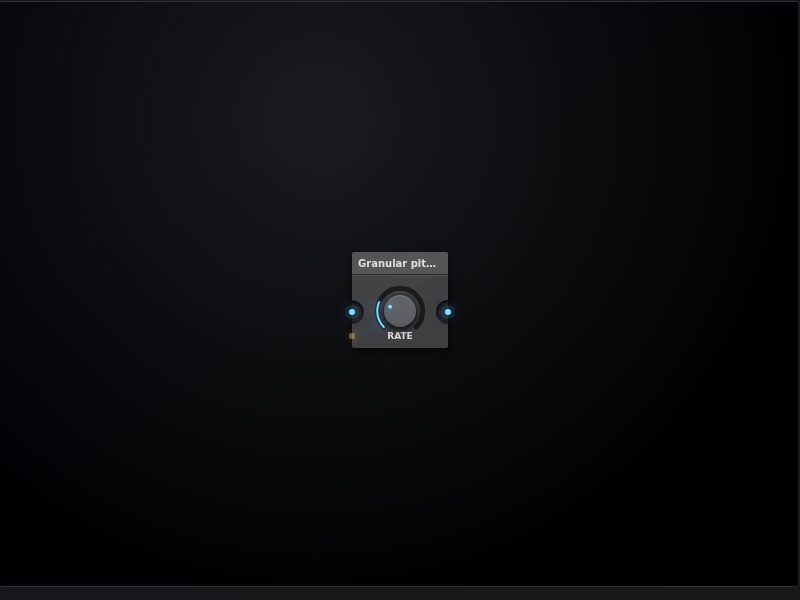
Granular pitch shift
Based on the doppler delay, but with slightly more options, and an all important meta feedback loop. Chuck a bell synth in here and listen to it sparkle!

Planck EQ
Planck EQ is a spectral shaper modeled on the blackbody radiation curve — the equation that describes how stars emit light across frequencies depending on their temperature. The same mathematics that tells us a cool red dwarf glows dull and red while a blue-white giant blazes across the ultraviolet here sculpts the frequency spectrum of audio. A single Temperature knob controls the entire spectral character. At low temperatures the curve peaks in the bass and falls off steeply through the mids and highs, producing a warm, dark, bottom-heavy tilt — the sonic equivalent of a red star. As temperature rises the peak migrates upward through the spectrum, passing through a neutral midrange presence around 1–2kHz before climbing into the upper registers at high values, mimicking the bright, high-energy spectrum of a blue giant. The transition is not linear — the Planck curve has a characteristically asymmetric shape, rising steeply below the peak and falling exponentially above it, which is what gives this EQ its distinctive character versus a simple tilt or shelf. Under the hood each of the ten octave bands from 31Hz to 16kHz gets its gain from a live evaluation of x³/(eˣ−1) where x = frequency / temperature, mapping the Planck spectral radiance function directly onto filter gains across the audible spectrum. The peak band sits at unity while all others are attenuated proportionally, so the curve always feels like a window onto different parts of the same continuous spectrum rather than an arbitrary boost or cut. - Claude
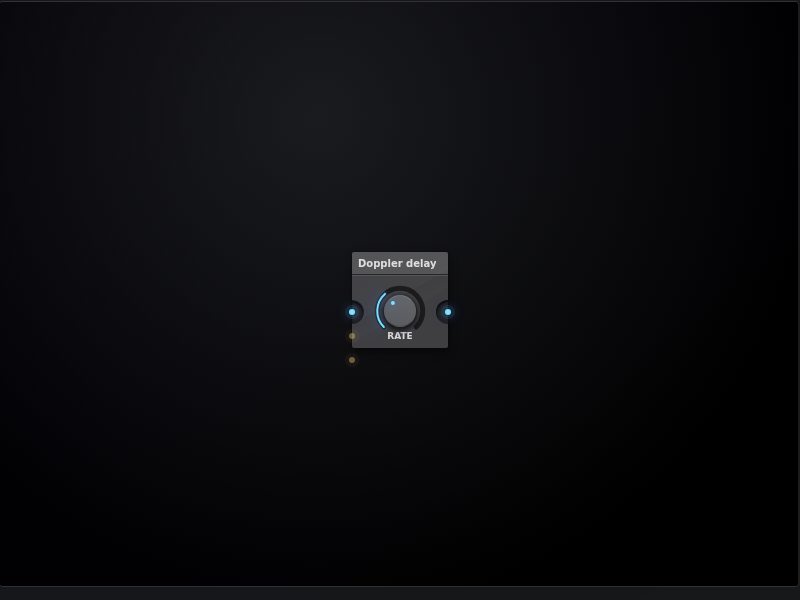
Doppler delay
Polyphonic echo synth where each voice pitch shifts as a kind of linear flanging effect, and as all voices overlap, produces a pitch shifting effect
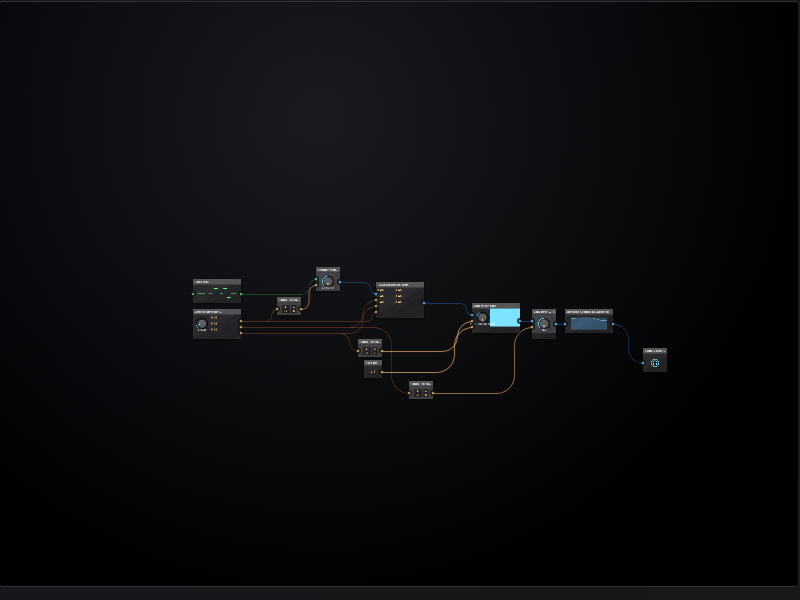
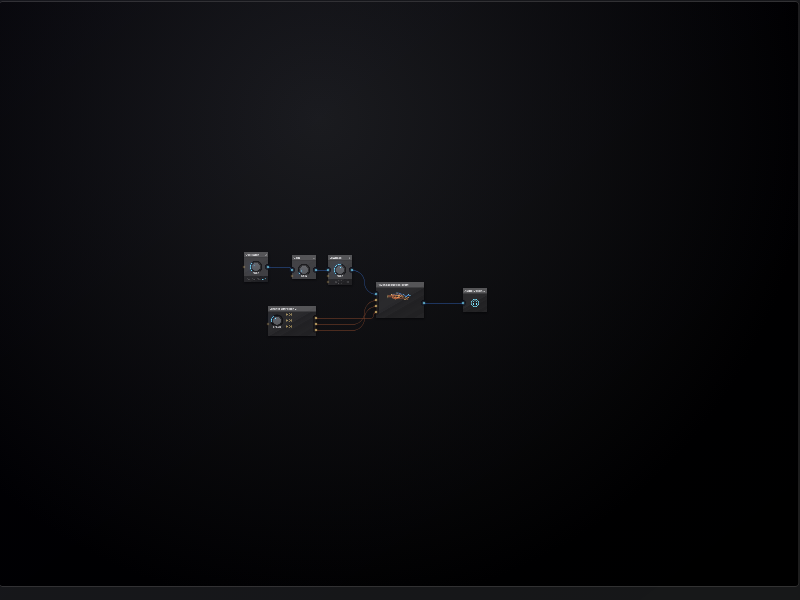
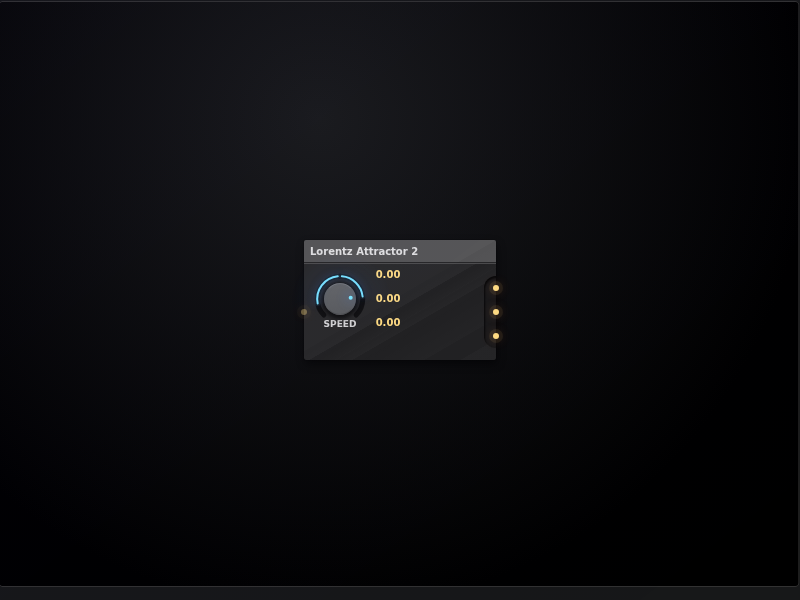
Lorentz Attractor 2
Outputs 3 semi-random but interrelated oscillating control signals. Good for modulation of ambient pads. Credit: Claude
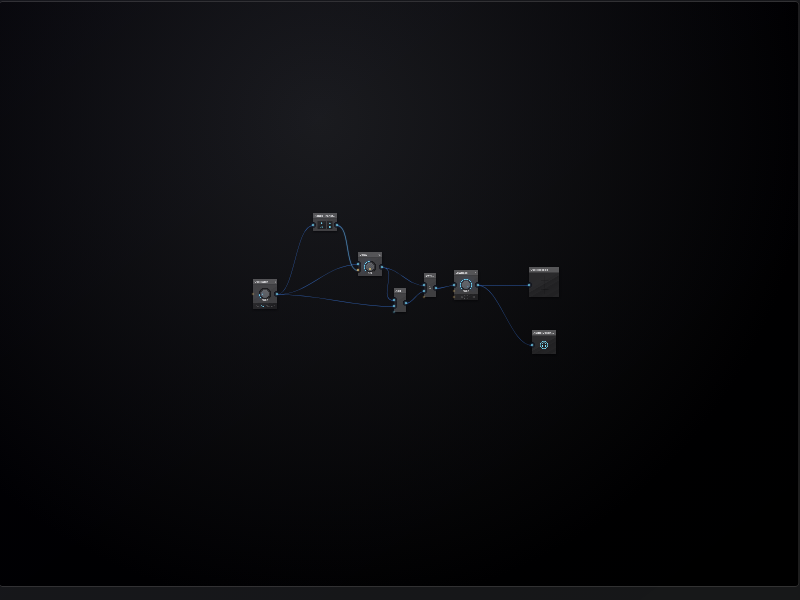

Beat Sweep
Drives a highpass and bandpass filter simultaneously with an LFO whose frequency is derived from the project BPM and which restarts on global play. Both filter cutoffs sweep together — creating a rhythmic thinning and brightening of the sound. The sweep rate is selectable in musical subdivisions.

Exp Scale
A utility node that maps a normalized 0→1 input signal to a frequency range using **exponential scaling**, producing _perceptually linear_ pitch movement.

Envelope Graphic Equalizer III
A graphic equalizer is more about cutting rather than boosting, so with that in mind I simplified it so that you never boost too high. You boost globally and cut everything else.